Skip to content
Flintworks
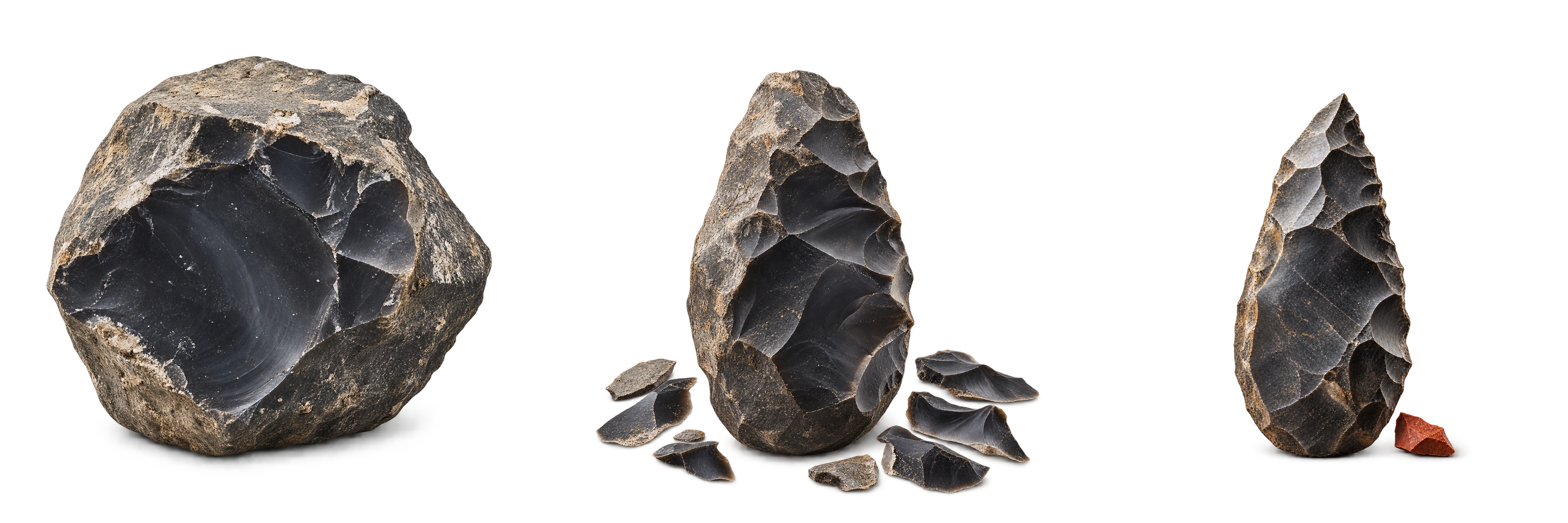
Three stages of flint: a raw natural lump, a partly carved stone with scattered flakes, and a finished handaxe.

Software, business & AI

Building with AI.

Essays and experiments on building software with AI, and what that means for the people doing the work.

The stone

What a flint is.

Flint is a stone that breaks into tools.

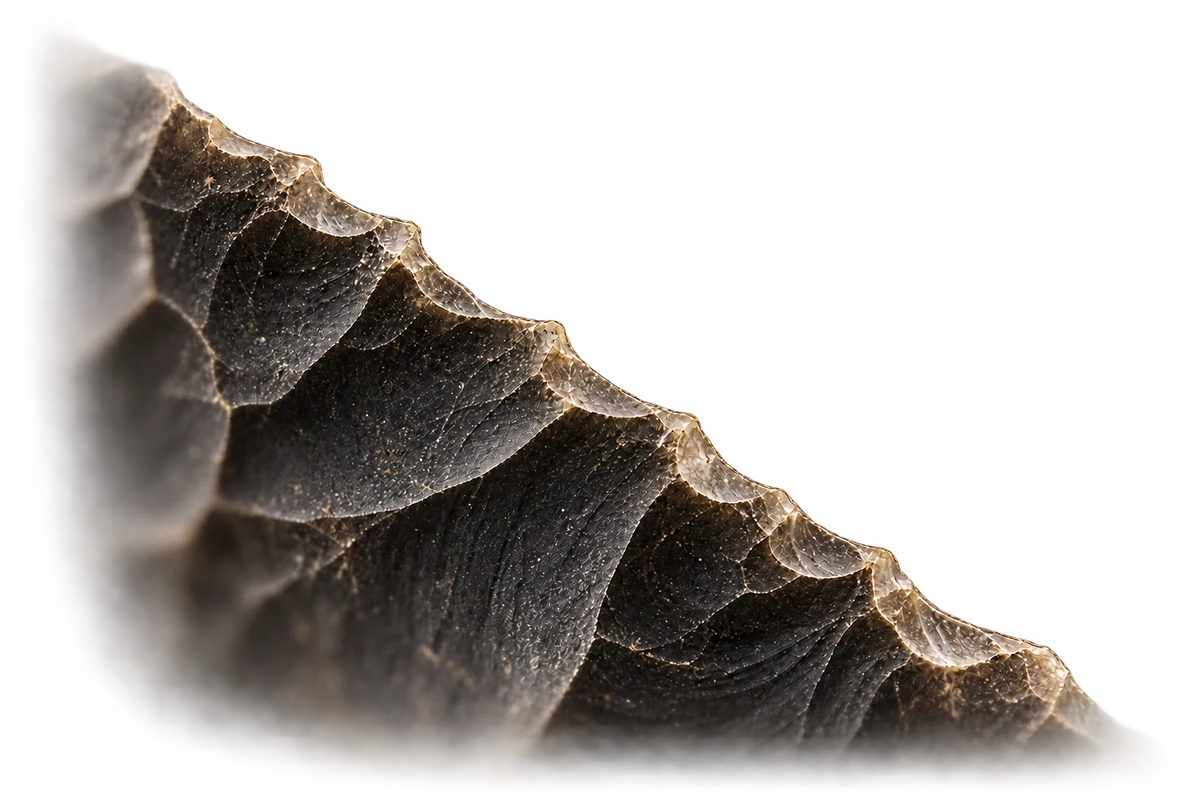
Strike it the right way and it doesn’t crumble: it sheds a flake with a cutting edge. Knapping a lump of flint into a blade, a scraper, or an axe was, arguably, the first act of human engineering.

An extreme close-up of the sharp, scalloped cutting edge of a flint tool.

The spark

Why Flintworks.

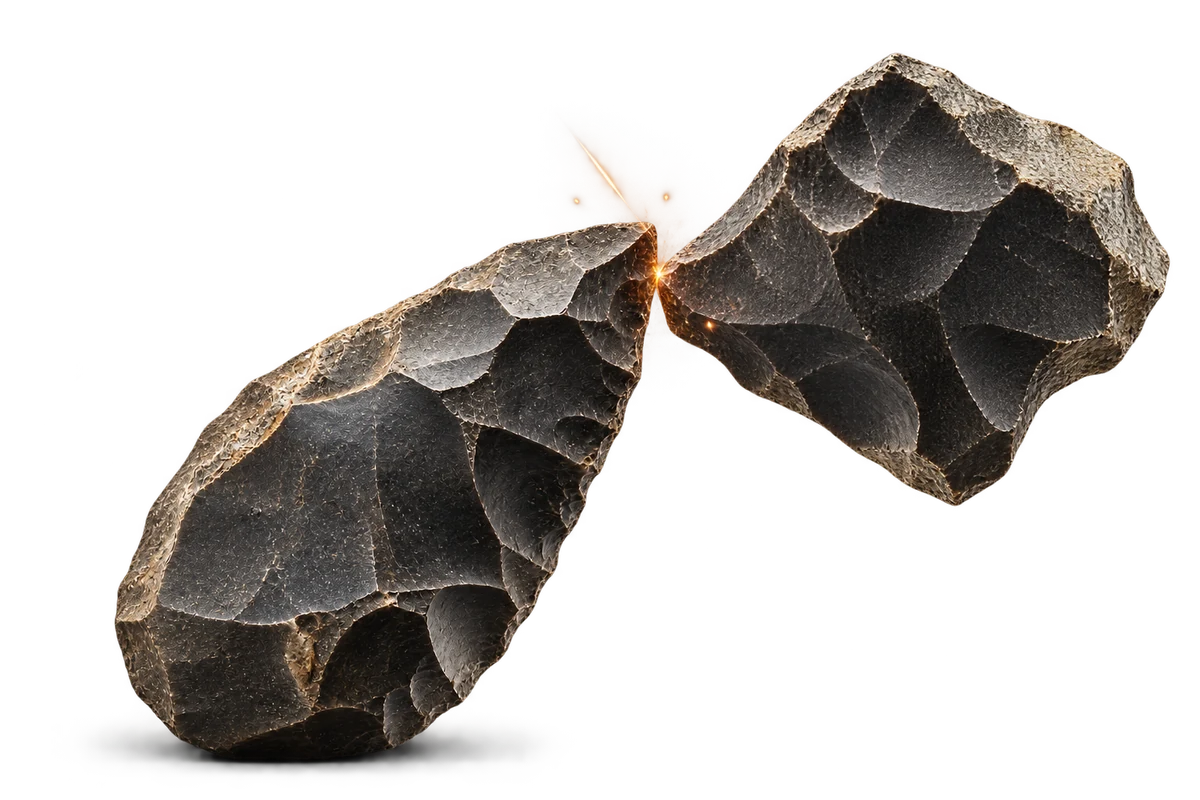
Strike two flints and you get fire.

Working with AI feels like a return to that moment: hitting rocks together to see what catches. Flintworks is my lab and public notebook for that work: the strikes, the misfires, and the tools that hold up.

A small orange spark at the meeting point of two chipped flints.

The toolkit

How we build.

One stone, many tools.

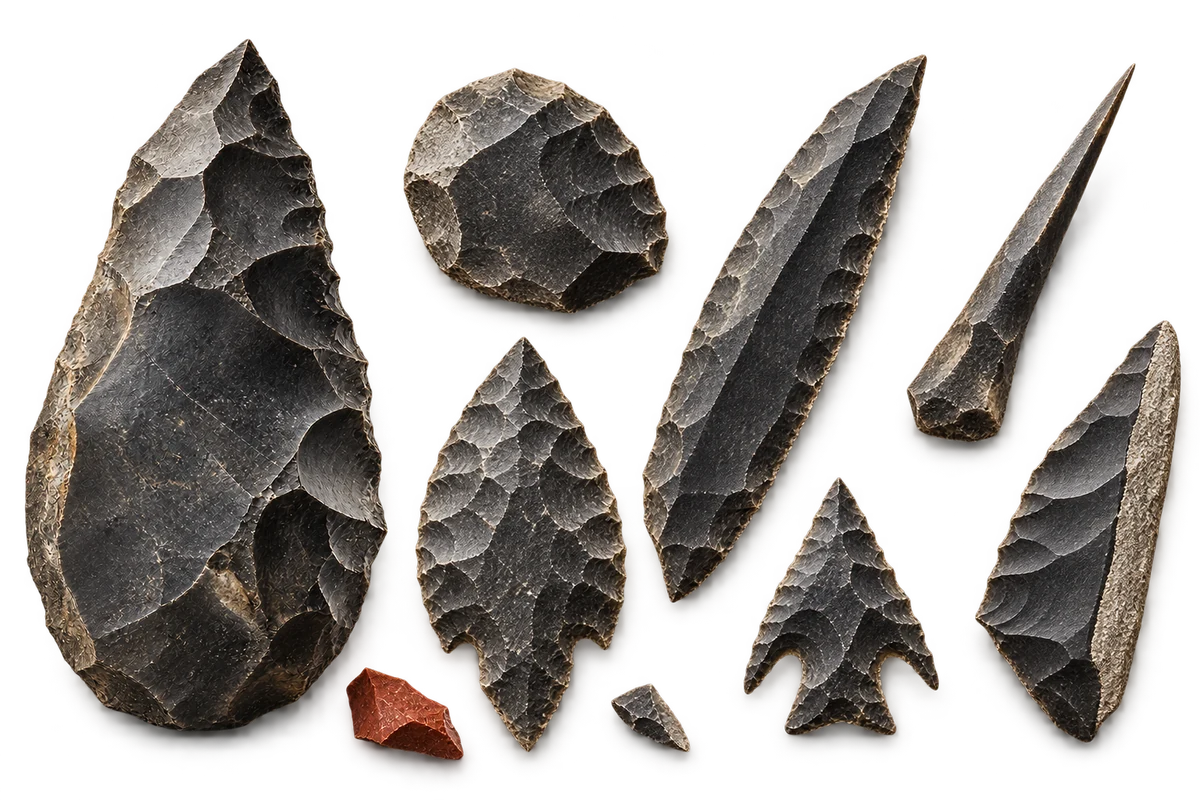
The same flint yielded axes, scrapers, blades, and arrowheads, each shaped for a single job. I’m a generalist by design, working across business, design, product, and engineering because a decision in one changes the others.

Seven different flint tools and weapon points laid together: an axe, scraper, blade, piercer, spearhead, arrowhead, and cutting flake.

Notebook

All writing

Essay

LLMs are specializing: Jev is only the start

Function calling, structured outputs, reasoning, and tool use each started as code that developers wrote around a language model, and each was later built into the models. The need left over became Jev, a model that returns decisions and writes no text, and it came from outside the big labs.

Read the essay