A while back, I saw this interaction on x/twitter between Gary Tan and Paul Graham.
Garry Tan: “Starting a company is probably the only way to try to escape bullshit jobs…”
Paul Graham: “There are at least two other options: work for a company whose CEO has kept bullshit at bay … and work as an individual artisan.”
I used to agree with this take more than I do now.
I don’t think many (mature) people want to “start companies” for the sake of being founders.
I think they want something deeper: agency, craft, clarity, independence, and a way of working that doesn’t feel fundamentally hostile to being alive.
What people actually want from work
I think Paul Graham has the real intuition: what people actually want is to be artisans. To do good work. To be trusted to do it well. To have enough autonomy to shape their days around outcomes, not be micro-managed.
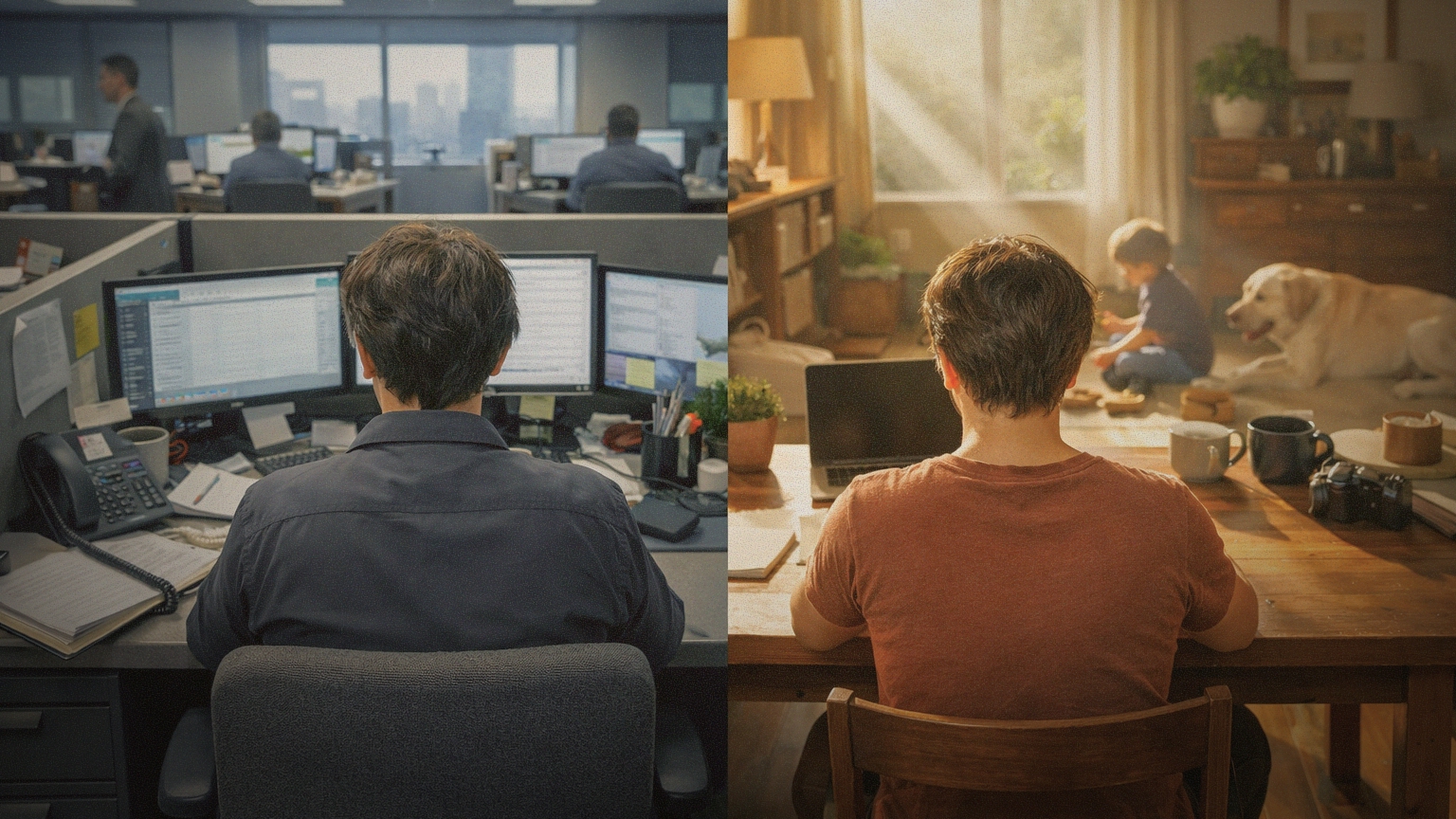
People want room to focus. They want work that fits a human life, not the other way around. They want to care about the people around them. They want to not spend their best years overworked, overmanaged, and half-dead in a dimly lit cubicle while it’s sunny outside.
Work leaves too little room for real life
I know many people that seem to exercise good judgement in their jobs, only to see the quality of their decision degrade in what matters most, their day to day lives.
Obviously, if you drain knowledge workers from their intellectual ability 5 days out of 7, the rest, is just spent recovering to be ready again on Monday. There is no space left to use their own skills to better their own lives.
AI may reinforce the worst parts of work
Modern employment fragments attention. The people closest to the work often have the clearest sense of what actually works, but too often that gets buried under hierarchy, process, and managerial abstraction. Or worse, C-level disputes and lack of clarity on vision and execution.
And now AI is mostly making some of these old bad habits worse.
It is making it easier for organizations to produce more, faster, without asking whether the thing being produced should exist, whether it’s coherent, whether anyone will want to maintain it, or whether the people doing the cleanup are quietly burning out. The old problems are here to stay…
The rise of the modern artisan
When people romanticize “founding a company,” I think they’re often reaching for something deeper than that label.
Maybe the future of work looks more like one-person agencies: people with real taste, real judgment, and broad capability, able to own outcomes end to end like artisans of before, but with modern tools.
Modern artisans
More sovereign in how they work, more responsible for what they produce, and less trapped inside systems that kill the very thing they hired them for.
That feels closer to what people (may) actually want.